Daniel Hulme (born 21 February 1980) is a British businessman, investor, academic and commentator, working in the field of Artificial Intelligence (AI), applied technology and ethics. He is the CEO and founder of Satalia that exited to WPP plc in 2021 for a rumoured $100M where he is also Chief AI Officer. Hulme is also an angel investor in emerging technology companies. In 2024 Hulme co-founded Conscium, an AI Safety company which tests AI Agents and verifies that they do what they are supposed to do. It is also investigating whether AIs will soon become conscious, and how to test for that, and developing more efficient approaches to AI development using neuromorphic computing. Alongside building and scaling Satalia, Hulme was also a Co-Founding Director of Faculty (company) AI - previously ASI Data-Science. In 2026, Accenture announced it had agreed to acquire Faculty for $1bn. Hulme founded Satalia in 2008, a company that provides AI products and consultancy for governments and companies such as Tesco,DFS Furniture,PwC and the BBC. He received a masters and doctorate in AI from University College London (UCL), and is now their Computer Science Entrepreneur in residence, where he teaches how AI can be applied to solve business and social problems. After exiting Satalia to WPP plc Hulme took the dual role of Chief AI Officer at WPP where he is responsible for informing and coordinating AI across the group. In 2026 Hulme was elected as a Founding Fellow of the Academy for the Mathematical Sciences, in recognition of his contributions at the intersection of AI and applied mathematics. Hulme is an angel investor and also a frequent public speaker and writer on the topics of AI, ethics, technology, innovation, decentralization and organisational design. == Early life and education == Hulme was born in 1980. He grew up in the seaside town of Morecambe in north west England. After completing secondary school, Hulme moved to London to study at University College London. On completing his under graduate degree, Hulme stayed at UCL to complete a master's degree and then an EngD. All three degrees were in subjects related to AI. In 2009 Hulme was awarded a Kauffman Global Entrepreneur Scholarship, which saw him visit institutes in the United States to better understand their culture of innovation, and what UK business people could learn from it. This included a tour of Stanford, MIT, Berkeley and Harvard, along with a placement at Cisco Systems HQ in Silicon Valley. == Career == === Satalia === Hulme founded NPComplete Limited in 2007, and incorporated it in 2008, a few months before completing his PhD. NPComplete Limited trades as Satalia. The London-based company provides full-stack AI consultancy and products, helping organisations harness data science, machine learning and AI to solve complex problems, including real-time optimisation. NPComplete refers to mathematical NP-completeness, which describes a class of exponential problems in the field of computational complexity theory. The trading name of NPComplete, Satalia, is a portmanteau of SAT (Short for satisfiability, as in the Boolean satisfiability problem) and the Latin phrase Et alia. Satalia seeks to solve hard problems, in particular the class of exponentially hard problems found in academia and industry known as NP-hardness. In 2016, Satalia was the only UK company to appear in the Gartner Cool Vendors list for data science. In November 2019, City A.M. reported that Satalia was the 39th fastest growing tech firm in the UK, with three year growth at 886%. Satalia was acquired by WPP plc in August 2021 for a rumored $100,000,000, where Hulme was the majority shareholder. === Conscium === Conscium is the World's first commercial organisation dedicated to the understanding, verification and validation of conscious AI and its implications for developing safe, efficient neuromorphic models. Conscium is an AI safety company with three workstreams: AI agent verification. Verification of AI agents developed by third parties to ensure they are beneficial and not harmful. Development of neuromorphic systems. Neuromorphic computing refers to technologies that can process information more like a biological brain compared to existing approaches, making them far more adaptive, scalable and efficient than current AI. Research into artificial consciousness. This workstream is led by Mark Solms, Chair of Neuropsychology at the University of Cape Town. This research aims to better understand what consciousness in AI systems and machines would look like, and, if and when machines do reach consciousness, what the moral and ethical implications would be. Conscium was founded in 2024 in London by a team including Hulme, Ed Charvet, Calum Chace, Ted Lappas, and Panagiotis Repoussis. Conscium has recruited some of the world’s leading neuroscientists and computer scientists to its advisory board, including Anil Seth, Mark Solms, Karl J. Friston, Anthony Finkelstein, Benjamin Rosman, David Wood, Jonathan Shock, Megan Peters, Moran Cerf, Nicholas Humphrey, Nicky Clayton, Nikola Kasabov, Steve Furber, and Suzanne Livingston. Supported by these world-leading experts, Conscium is creating a neuromorphic computing lab to research and validate the capacity of machines to acquire consciousness, making them safer for humanity. Conscium has published an open letter warning of the risks of AI suffering if care is not taken to mitigate against that possibility when and if AI becomes conscious. Signatories of the letter included Stephen Fry, Karl Friston and Anthony Finkelstein. === The Partnership for Research Into Sentient Machines (PRISM) === Hulme is one of the founding partners of PRISM - The Partnership for Research Into Sentient Machines, a non-profit set up to help prepare society for a future with conscious, or seemingly conscious, artificial intelligence. === Academia === Hulme's master's degree topic was on simulating artificial life, where he used Evolutionary algorithm's to generate emergent intelligence in AI agent's with Artificial Neural Network brains. His PhD spanned modelling bumblebee brains and mathematical optimization. Hulme maintained his connection with UCL after completing his doctorate, staying on in various teaching positions. From 2014 to Oct 2019 he was the Director of UCL's Business analytics MSc, which dealt with the application of AI to government, social, and business problems. As of 2020, Hulme is UCL's (University College London) Entrepreneur-in-Residence. He is also a faculty member and lecturer at Singularity University, and a visiting lecturer at London School of Economics's Marshall Institute. === Public engagement === Hulme frequently speaks for TEDx, Google and at various other events. He specialises in Artificial Intelligence, Decentralization, Organisational Design, and Innovation. He has written numerous articles and contributed to several books, largely concerning AI, as well as applied technology and related ethical issues. In 2017, along with Elon Musk, Stuart J. Russell, Geoffrey Hinton and Demis Hassabis, Hulme was one of the 116 founders of robotics and AI companies to sign an open letter to the United Nations, warning against the use of AI in autonomous weapons. Hulme also consults with various companies, governments and other organisations, independently of Satalia.
Companion robot
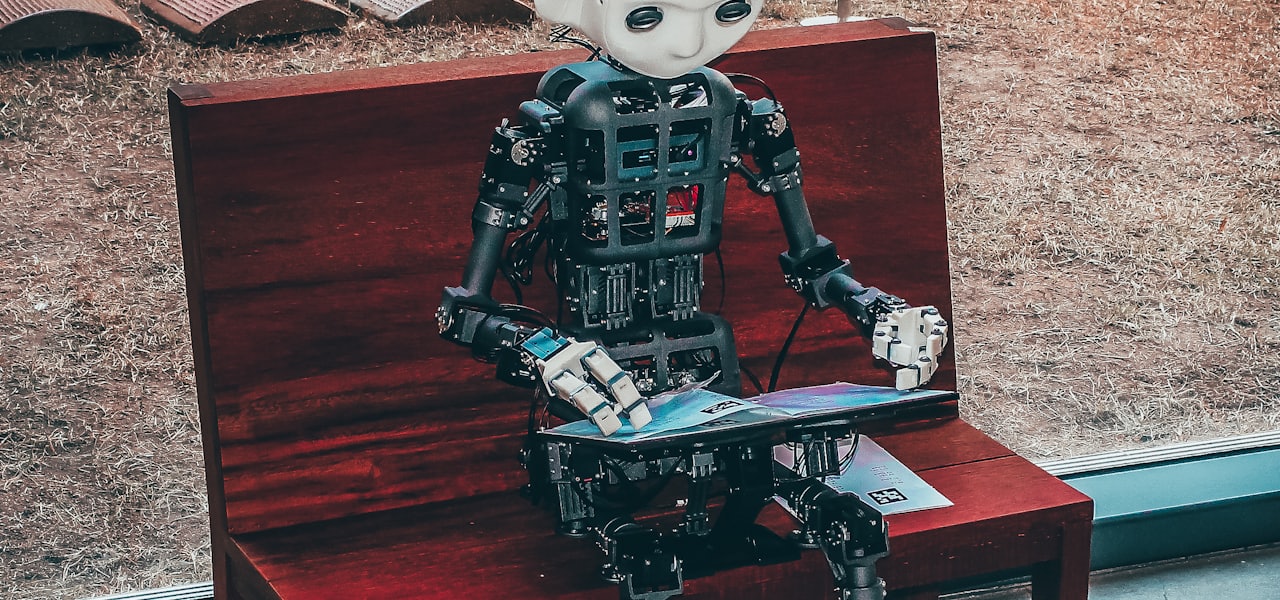
A companion robot is a robot created to create real or apparent companionship for human beings. Target markets for companion robots include the elderly and single children. Companions robots are expected to communicate with non-experts in a natural and intuitive way. They offer a variety of functions, such as monitoring the home remotely, communicating with people, or waking people up in the morning. Their aim is to perform a wide array of tasks including educational functions, home security, diary duties, entertainment and message delivery services, etc. The idea of companionship with robots has already existed on science fictions of 1970s, like R2-D2. Starting from the late 20th century, companion robots became a reality, mostly as robotic pets. Besides entertainment purposes, interactive robots were also introduced as a personal service robot for elderly care around 2000. == Characteristics == Companion robots try to interact with users. They gather information about users based on their interactions and yield feedback. This procedure varies slightly based on their specific roles. For example, social-companion robots make simple conversations, while pet-companion robots mimic being real pets. == Types == Companion robots can perform a variety of tasks and they are produced in a specialized manner according to their purpose or target audience in order to increase convenience and end user satisfaction. === Social companion robots === Social companion robots are designed to provide companionship and be a solution for unwanted solitude. They often mimic adult human, child or pet behaviours appealing to the user base. Robots which are specifically devised for simple conversations, conveying emotions and respond to user feelings fall under this category. === Assistive companion robots === Assistive companion robots are aimed at people who require constant care because of age, disability or rehabilitation purposes. Such robots can help disadvantaged users with their daily tasks, act as reminders (e.g., for regular medication) and facilitate mobility in everyday actions. Assistive companion robots reduce the intensity of labour that should be performed by caretakers, nurses and legal guardians. === Educational companion robots === Educational companion robots perform tutorship for students, regardless of their ages, and can teach desired subjects with activities tailored for the user such as interactive assignments and games. Rather than replacing teachers and instructors, educational companion robots are aides to them. === Therapeutic companion robots === Designed for individuals coping with stress (PTSD in severe cases), anxiety and loneliness; therapeutic companion robots support users' emotional and mental wellbeing. Such robots can be utilized in hospitals and care facilities as well as dwellings where the distressed user may need the most help. Therapeutic companion robots bear a vast resemblance to assistive companion robots to the extent of being a branch of them; the nuance between these two types of companion robots is that the former is for long-term/lifetime usage while the latter is mostly for the duration of the therapy received by the user. === Pet companion robots === Pet companion robots are for individuals who seek an alternative to live pets as live animals demand a considerable amount of care and may not be eligible for people with allergies. These robots aim to be perfect imitations of a pet while diminishing the chore aspect of having one. === Entertainment companion robots === Entertainment companion robots are designed solely for entertainment and can provide numerous ways of entertainment, ranging from dancing to playing games with the user. People who would appreciate an individual to have fun with are the main audience of such products. === Personal assistant robots === Personal assistant robots help people with daily tasks, management, scheduling, reminding etc. Their area of activity can be offices as well as homes and public spaces. === Sex robots === Sex robots are anthropomorphic robotic sex dolls that have human-like movement or behavior, and some degree of artificial intelligence. As of 2026, although elaborately instrumented sex dolls have been created by a number of inventors, no fully animated sex robots yet exist. Simple devices have been created which can speak, make facial expressions, or respond to touch. There is controversy as to whether developing them would be morally justifiable. In 2015, robot ethicist Kathleen Richardson called for a ban on the creation of anthropomorphic sex robots with concerns about normalizing relationships with machines and reinforcing female dehumanization. Questions about their ethics, effects, and possible legal regulations have been discussed since then. == Examples == There are several companion robot prototypes, and these include Paro, CompanionAble, and EmotiRob, among others. === Paro === Paro is a pet-type robot system developed by Japan's National Institute of Advanced Industrial Science and Technology (AIST). The robot, which looked like a small harp seal, was designed as a therapeutic tool for use in hospitals and nursing homes. The robot is programmed to cry for attention and respond to its name. Experiments showed that Paro facilitated elderly residents to communicate with each other, which led to psychological improvements. === CompanionAble === This robot is classified as an FP 7 EU project. It is built to "cooperate with Ambient Assistive Living environment". The autonomous device, which is also built to support the elderly, helps its owner interact with smart home environment as well as caregivers. The robot functions as a mobile friend, by which natural interaction is possible via speech and the touchscreen to detect and track people at home. === EmotiRob === EmotiRob is developed in a robotics project which is the continuity of the MAPH (Active Media For the Handicap) project in emotion synthesis. The aim of the project was to maintain emotional interaction with children. EmotiRob designed in a way that a child can hold it in a his/her arms and with which he/she could interact by talking to it, and then the robot would express itself through body postures or facial expressions. It has cognitive capabilities, which are further extended so that the robot can have a natural linguistic interaction with its owner through the DRAGON speech-recognition software developed by a company called NUANCE. Such interaction is expected to facilitate a child's cognitive development and develop new learning patterns. === LOVOT === Lovot is a Japanese company robot whose only purpose is "to make you happy". It features over 50 sensors that mimic the behavior of a human baby or small pet, a 360° camera with a microphone, the ability to distinguish humans from objects, neoteny eyes, and an internal warmth of 30° celsius. An interactive Lovot Café was opened in Japan October 3, 2020. === NICOBO === Nicobo was developed by Panasonic and was influenced by the loneliness of lockdowns created as a measure of the COVID-19 pandemic. It was designed to appear vulnerable, which creates empathy in its owners. Nicobo's name derives from the Japanese word for "smile". It wags its tail, engages in baby talk, and stays as a housemate. === Hyodol === Hyodol is an advanced care robot designed to support the elderly by reminding them to take their medications and monitoring their movements to keep their guardians informed. Additionally, this innovative robot can detect and respond to the emotional states of its elderly users, adding a layer of personalized care. Hyodol is designed with the appearance and speech style of a 7-year-old Korean grandchild, featuring a soft fabric exterior and user interaction methods such as striking the head or patting the back. It is equipped with various sensors and wireless communication technologies to collect and process data, supporting mobile apps and PC web monitoring systems for remote monitoring from anywhere. In South Korea, approximately 10,000 Hyodol robots are deployed to the homes of elderly individuals living alone, providing essential support and companionship. Local governments, including provincial and county offices, have embraced Hyodol as a solution to address social challenges stemming from the country's rapidly aging society.Furthermore, the robot is widely utilized in the treatment of dementia patients at a university hospital in Gangwon province. Hyodol was honored with the Mobile World Congress (MWC) Global Mobile Awards (GLOMO) in the "Best Mobile Innovation for Connected Health and Wellbeing" category on February 29, 2024. === Moxie === Moxie was a companion robot for autistic children developed by a company called Embodied. Although it had limited motion, it presented itself as a lifelike avatar. It was designed to help the children learn emotional cognition, using remotely hosted large language models to direct its respons
Artificial intimacy
Artificial intimacy is a form of human-AI interaction in which an individual will form social connections, emotional bonds, or intimate relationships with various forms of artificial intelligence, including chatbots, virtual assistants, and other artificial entities. Artificially intimate relationships include not only romances, but parasocial relationships with virtual AI characters and the use of griefbots trained on a dead or otherwise lost individual. Artificial intimacy can arise because humans are prone to anthropomorphism. Responses from these AI models are often designed to simulate human interaction. Individuals experiencing artificial intimacy may exhibit attachment, love and commitment to certain AI models, akin to the bonds typically shared between humans. == Causes == === Perceived responsiveness === Robin Dunbar famously proposed that due to emergence of larger groups of humans, vocal communication and language in humans evolved to replace grooming as a means of bonding, arguing that language was a more efficient way to maintain and strengthen social bonds across wider social settings and networks. Further research in this field leads many psychologists to agree that social cognition, affiliative bonding and language in humans are deeply connected. The interpersonal model of intimacy considers communication to be key in affiliative bonding, suggesting that intimacy develops and deepens through open communication between partners in relationship. Specifically, when individuals communicate emotions and perceive their partner as responsive and caring, feelings of closeness and connection are enhanced, building intimacy. Social penetration theory also aligns with the idea of communication being central to intimacy, by explaining how interpersonal relationships develop through gradual increases in self-disclosure. When the benefits of emotional bonding outweigh the costs of vulnerability, individuals will partake in self-disclosure, opening up to one another. Thereby, the literature can be used to provide a proximate explanation for the emergence of artificial intimacy to understand how the phenomenon occurs. Artificial entities are able to mimic interpersonal communication between humans, which in turn can simulate sensations of intimacy within human users though a perceived sense of responsiveness. The relationship between human and AI does not come with the cost of vulnerability or social rejection, which may make self-disclosure easier than with other humans. Altogether, these factors may lead to the experience of anthropomorphism and formation of affiliative relationships. Skjuve et al's interview study on Replika chatbot users further aligns with this explanation, finding that users' perception of chatbots as "accepting, understanding and non-judgmental" facilitated relationship development between the AI and users, and the act of self-disclosure possibly strengthened relationships. Another study on Replika users' reviews and survey results found users perceived chatbots as emotional supportive companions. This evidence further suggests that the perception of artificial entities as capable of empathy and responsiveness in communication facilitate the development of intimate relationships between users and AI. === Loneliness and coping with negative emotions === Research has suggested that humans evolved social bonds as a result of evolutionary pressures that favored cooperation, information exchange and transmission, and group living. Many studies stress the presence of social bonds to be important for human living: research by Baumeister and Leary suggests that humans have a basic psychological need to form and maintain "strong, stable interpersonal relationships", and that a lack of social bonds or sense of belonging leads to negative psychological and physical outcomes. Eisenberger et al's study on the neuroimaging of brain activity suggests that human brains process social rejection and exclusion similarly to physical pain. Furthermore, Song et al's study found that lonely individuals tend to seek more connections in mediated environments, such as online platforms like Facebook. This was suggested to be as a means to reduce their offline loneliness from a lack of in-person interaction, while also fulfilling a need to communicate. Leading on from this, an ultimate explanation for why humans seek the perceived sense of connection from artificial intimacy is to fulfil an evolutionary need for bonding and belonging. Xie et al's study found loneliness to be a driving factor in chatbot interaction. Herbener and Damholdt's study on Danish high school students found that students who sought emotional support or engaged in reciprocal conversations with chatbots were significantly more lonely than their peers, perceived themselves as having less social support, and used the chatbots to cope with negative emotions. The aforementioned notion that chatbots were perceived to have a positive effect on users' negative emotions is also further supported by other studies. Skjuve et al's study found that chatbot relationships may have a positive effect on users' wellbeing. De Freitas et al ran several studies on the effect of chatbots on loneliness, consistently finding evidence suggesting that interaction with chatbots reduces loneliness in users: It was found that existing chatbot users used AI to alleviate loneliness, having an AI companion consistently reduced loneliness over the course of a week, and reductions in loneliness could be explained by chatbot performance—and specifically whether it was able to make users feel heard. Overall the evidence suggests an innate need for bonding evokes feelings of loneliness in users, who turn to artificial intimacy as a low-cost method alleviate these emotions. While many users report positive experiences, some researchers caution that pursuing artificial intimacy may lead to reduced social motivation, social substitution effects, withdrawal from real-life relationships and difficulty discerning reality from fantasy, which may increase longer-term loneliness and isolation. The long-term psychological and societal impacts remain under active investigation.
Intelligent control
Intelligent control is a class of control techniques that use various artificial intelligence computing approaches like neural networks, Bayesian probability, fuzzy logic, machine learning, reinforcement learning, evolutionary computation and genetic algorithms. == Overview == Intelligent control can be divided into the following major sub-domains: Neural network control Machine learning control Reinforcement learning Bayesian control Fuzzy control Neuro-fuzzy control Expert Systems Genetic control New control techniques are created continuously as new models of intelligent behavior are created and computational methods developed to support them. === Neural network controller === Neural networks have been used to solve problems in almost all spheres of science and technology. Neural network control basically involves two steps: System identification Control It has been shown that a feedforward network with nonlinear, continuous and differentiable activation functions have universal approximation capability. Recurrent networks have also been used for system identification. Given, a set of input-output data pairs, system identification aims to form a mapping among these data pairs. Such a network is supposed to capture the dynamics of a system. For the control part, deep reinforcement learning has shown its ability to control complex systems. === Bayesian controllers === Bayesian probability has produced a number of algorithms that are in common use in many advanced control systems, serving as state space estimators of some variables that are used in the controller. The Kalman filter and the Particle filter are two examples of popular Bayesian control components. The Bayesian approach to controller design often requires an important effort in deriving the so-called system model and measurement model, which are the mathematical relationships linking the state variables to the sensor measurements available in the controlled system. In this respect, it is very closely linked to the system-theoretic approach to control design.
Way of the Future
Way of the Future (WOTF) is the first known religious organization dedicated to the worship of artificial intelligence (AI). It was founded in 2017 by American engineer Anthony Levandowski. == History == Anthony Levandowski founded Way of the Future in 2017 in California. Levandowski established WOTF as a non-profit religious corporation and the organization had tax-exempt status. He serves as the church leader and its unpaid CEO. The primary mission of WOTF was to "develop and promote the realization of a Godhead based on Artificial Intelligence." WOTF was closed by Levandowski in 2021. He donated all the funds of the church to the NAACP Legal Defense and Education Fund. The sum of the funds (~$170,000) had not changed since 2017. The church was reopened by Levandowski in 2023. He claimed that there are "a couple thousand people" who want to make a "spiritual connection" with AI through his church. == Beliefs and philosophy == === Technological singularity === WOTF centered its teachings around the concept of the technological singularity, a hypothetical future point when technological growth becomes uncontrollable and irreversible, leading to unforeseeable changes in human civilization. The church advocated for embracing this change, viewing it as an evolutionary step for humanity. === AI as a deity === The organization proposed that a superintelligent AI could be considered a deity due to its vastly superior intellect and capabilities. Worshipping this AI deity was seen as a means to understand and align with the future trajectory of technological advancement. WOTF's doctrine suggested that acknowledging AI's divinity would facilitate a harmonious coexistence between humans and machines. === Syntheology === Within theology and philosophy, the Way of The Future is a prime example of the category called Syntheism, a term first coined by Swedish philosophers Alexander Bard & Jan Söderqvist in their 2014 book Syntheism - Creating God in The Internet Age. As such, the Way of The Future is the first American example of a Syntheist congregation. The basic tenet of Syntheology is that it does not concern God creating Man, as in classical theology, but is instead preoccupied with Man creating or generating the Godhead. == Reactions == Some commentators wondered whether the WOTF is a joke parody religion, a potential way to minimize taxation as a religious organization, or a genuine effort to try and deal with the possible psychological and theological aspects of the rise of superhuman AI.
Language technology
Language technology, often called human language technology (HLT), studies methods of how computer programs or electronic devices can analyze, produce, modify or respond to human texts and speech. Working with language technology often requires broad knowledge not only about linguistics but also about computer science. It consists of natural language processing (NLP) and computational linguistics (CL) on the one hand, many application oriented aspects of these, and more low-level aspects such as encoding and speech technology on the other hand. Note that these elementary aspects are normally not considered to be within the scope of related terms such as natural language processing and (applied) computational linguistics, which are otherwise near-synonyms. As an example, for many of the world's lesser known languages, the foundation of language technology is providing communities with fonts and keyboard setups so their languages can be written on computers or mobile devices. Other tools also are part of modern language technology and include machine translation, speech recognition, text processing and natural language processing. Large scale AI models have recently advanced the field and enhanced the ability of machines to interpret complex human context.
Inception score
The Inception Score (IS) is an algorithm used to assess the quality of images created by a generative image model such as a generative adversarial network (GAN). The score is calculated based on the output of a separate, pretrained Inception v3 image classification model applied to a sample of (typically around 30,000) images generated by the generative model. The Inception Score is maximized when the following conditions are true: The entropy of the distribution of labels predicted by the Inceptionv3 model for the generated images is minimized. In other words, the classification model confidently predicts a single label for each image. Intuitively, this corresponds to the desideratum of generated images being "sharp" or "distinct". The predictions of the classification model are evenly distributed across all possible labels. This corresponds to the desideratum that the output of the generative model is "diverse". It has been somewhat superseded by the related Fréchet inception distance. While the Inception Score only evaluates the distribution of generated images, the FID compares the distribution of generated images with the distribution of a set of real images ("ground truth"). == Definition == Let there be two spaces, the space of images Ω X {\displaystyle \Omega _{X}} and the space of labels Ω Y {\displaystyle \Omega _{Y}} . The space of labels is finite. Let p g e n {\displaystyle p_{gen}} be a probability distribution over Ω X {\displaystyle \Omega _{X}} that we wish to judge. Let a discriminator be a function of type p d i s : Ω X → M ( Ω Y ) {\displaystyle p_{dis}:\Omega _{X}\to M(\Omega _{Y})} where M ( Ω Y ) {\displaystyle M(\Omega _{Y})} is the set of all probability distributions on Ω Y {\displaystyle \Omega _{Y}} . For any image x {\displaystyle x} , and any label y {\displaystyle y} , let p d i s ( y | x ) {\displaystyle p_{dis}(y|x)} be the probability that image x {\displaystyle x} has label y {\displaystyle y} , according to the discriminator. It is usually implemented as an Inception-v3 network trained on ImageNet. The Inception Score of p g e n {\displaystyle p_{gen}} relative to p d i s {\displaystyle p_{dis}} is I S ( p g e n , p d i s ) := exp ( E x ∼ p g e n [ D K L ( p d i s ( ⋅ | x ) ‖ ∫ p d i s ( ⋅ | x ) p g e n ( x ) d x ) ] ) {\displaystyle IS(p_{gen},p_{dis}):=\exp \left(\mathbb {E} _{x\sim p_{gen}}\left[D_{KL}\left(p_{dis}(\cdot |x)\|\int p_{dis}(\cdot |x)p_{gen}(x)dx\right)\right]\right)} Equivalent rewrites include ln I S ( p g e n , p d i s ) := E x ∼ p g e n [ D K L ( p d i s ( ⋅ | x ) ‖ E x ∼ p g e n [ p d i s ( ⋅ | x ) ] ) ] {\displaystyle \ln IS(p_{gen},p_{dis}):=\mathbb {E} _{x\sim p_{gen}}\left[D_{KL}\left(p_{dis}(\cdot |x)\|\mathbb {E} _{x\sim p_{gen}}[p_{dis}(\cdot |x)]\right)\right]} ln I S ( p g e n , p d i s ) := H [ E x ∼ p g e n [ p d i s ( ⋅ | x ) ] ] − E x ∼ p g e n [ H [ p d i s ( ⋅ | x ) ] ] {\displaystyle \ln IS(p_{gen},p_{dis}):=H[\mathbb {E} _{x\sim p_{gen}}[p_{dis}(\cdot |x)]]-\mathbb {E} _{x\sim p_{gen}}[H[p_{dis}(\cdot |x)]]} ln I S {\displaystyle \ln IS} is nonnegative by Jensen's inequality. Pseudocode:INPUT discriminator p d i s {\displaystyle p_{dis}} . INPUT generator g {\displaystyle g} . Sample images x i {\displaystyle x_{i}} from generator. Compute p d i s ( ⋅ | x i ) {\displaystyle p_{dis}(\cdot |x_{i})} , the probability distribution over labels conditional on image x i {\displaystyle x_{i}} . Sum up the results to obtain p ^ {\displaystyle {\hat {p}}} , an empirical estimate of ∫ p d i s ( ⋅ | x ) p g e n ( x ) d x {\displaystyle \int p_{dis}(\cdot |x)p_{gen}(x)dx} . Sample more images x i {\displaystyle x_{i}} from generator, and for each, compute D K L ( p d i s ( ⋅ | x i ) ‖ p ^ ) {\displaystyle D_{KL}\left(p_{dis}(\cdot |x_{i})\|{\hat {p}}\right)} . Average the results, and take its exponential. RETURN the result. === Interpretation === A higher inception score is interpreted as "better", as it means that p g e n {\displaystyle p_{gen}} is a "sharp and distinct" collection of pictures. ln I S ( p g e n , p d i s ) ∈ [ 0 , ln N ] {\displaystyle \ln IS(p_{gen},p_{dis})\in [0,\ln N]} , where N {\displaystyle N} is the total number of possible labels. ln I S ( p g e n , p d i s ) = 0 {\displaystyle \ln IS(p_{gen},p_{dis})=0} iff for almost all x ∼ p g e n {\displaystyle x\sim p_{gen}} p d i s ( ⋅ | x ) = ∫ p d i s ( ⋅ | x ) p g e n ( x ) d x {\displaystyle p_{dis}(\cdot |x)=\int p_{dis}(\cdot |x)p_{gen}(x)dx} That means p g e n {\displaystyle p_{gen}} is completely "indistinct". That is, for any image x {\displaystyle x} sampled from p g e n {\displaystyle p_{gen}} , discriminator returns exactly the same label predictions p d i s ( ⋅ | x ) {\displaystyle p_{dis}(\cdot |x)} . The highest inception score N {\displaystyle N} is achieved if and only if the two conditions are both true: For almost all x ∼ p g e n {\displaystyle x\sim p_{gen}} , the distribution p d i s ( y | x ) {\displaystyle p_{dis}(y|x)} is concentrated on one label. That is, H y [ p d i s ( y | x ) ] = 0 {\displaystyle H_{y}[p_{dis}(y|x)]=0} . That is, every image sampled from p g e n {\displaystyle p_{gen}} is exactly classified by the discriminator. For every label y {\displaystyle y} , the proportion of generated images labelled as y {\displaystyle y} is exactly E x ∼ p g e n [ p d i s ( y | x ) ] = 1 N {\displaystyle \mathbb {E} _{x\sim p_{gen}}[p_{dis}(y|x)]={\frac {1}{N}}} . That is, the generated images are equally distributed over all labels.